
Exclusive overseas distribution plus technical cooperation advances Kossel’s peripheral DCB value chain roadmap
Suzhou, China — Kossel Medtech (Suzhou) Co., Ltd. (“Kossel”) has entered into a strategic cooperation agreement with InnoMed Technology Limited (“InnoMed”). Pursuant to the strategic cooperation agreement, Kossel is granted exclusive overseas distribution rights for InnoMed’s Python Drug-Eluting Dilatation Catheter. Drawing on its established commercial footprint spanning more than 20 countries, Kossel will drive global market adoption of the device. The partnership also includes technical collaboration: InnoMed will open its Python DCB patent platform to Kossel, laying the groundwork for the company’s future in‑house peripheral DCB development and bundling with complementary peripheral interventional consumables.
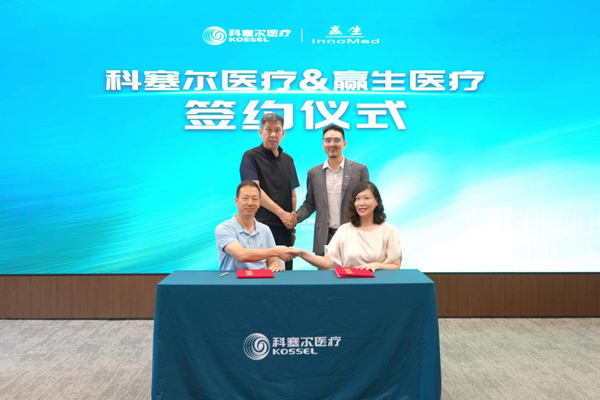
The technology and distribution partnership reflects an evolving go to market model for Chinese medical device exports. Rather than pursuing capital heavy, ground up overseas channel build out, domestic firms are now matching proven innovative products with mature global commercial infrastructure to speed international penetration through strategic synergy.
Powerful Alliance Expands Global Reach of “Implant Free Intervention”
Peripheral arterial disease (PAD) is a common, serious yet under‑recognized cardiovascular condition affecting over 200 million people worldwide, with rising prevalence. China faces a rapidly growing disease burden as well. According to the China Vascular Surgery Medical Device Industry Innovation and Development Report, an estimated 45 million Chinese patients lived with PAD in 2024, and that figure is projected to climb to roughly 62 million by 2030.
This large patient pool creates substantial unmet clinical needs. High restenosis rates remain a major limitation of standard plain balloon angioplasty. While stents address acute vessel elastic recoil, they carry long term risks including in stent restenosis and stent fracture. Clinicians have long sought therapies that restore vessel patency without leaving permanent implants inside the body.
Drug coated balloons (DCBs) fill this clinical gap. During balloon dilation, antiproliferative drugs are transferred to the vessel wall to suppress excessive smooth muscle cell proliferation, achieving revascularization while enabling implant free intervention. The 2025 Chinese Expert Consensus on Standardized Application of Lower Extremity Arterial Drug Coated Devices notes that DCBs and comparable drug coated devices effectively mitigate restenosis after lower limb endovascular procedures and are becoming a preferred treatment for peripheral arterial disease.
At the heart of the new collaboration is InnoMed’s Python Drug-Eluting Dilatation Catheter. Built on a platform engineered to match the performance benchmarks of leading international peripheral balloon catheters, it leverages proprietary coating technology for high drug coating stability. Its patented coat first then crimp manufacturing workflow delivers a low crossing profile of 1.28 mm. Upon balloon inflation, paclitaxel rapidly transfers to the vessel wall, delivering therapeutic drug doses while restoring vessel patency.
Kossel already has proven DCB commercial success in coronary interventions. In June 2026, the company acquired Xinzhi Medical, adding its sirolimus and paclitaxel coated balloon portfolio to its coronary pipeline. Combined with coronary scoring balloons and drug eluting stents from wholly owned subsidiary Mixin Medtech, Kossel now offers a full coronary solution suite covering pre treatment, implant free intervention and permanent stent implantation.
As clinical evidence for peripheral DCBs continues to accumulate, China’s volume based centralized procurement policies are reshaping domestic pricing and competitive dynamics. Expansion into high demand, higher margin international markets has become a key strategic priority.
As a pan vascular interventional platform enterprise, Kossel pursues its “Local Base, Global Reach” globalization strategy with end to end overseas capabilities spanning regulatory registration, distributor network management and global marketing. This partnership exemplifies how Chinese med‑tech firms leverage technical, product‑related and commercial‑channel strengths to build global market competitiveness, expanding the global footprint of implant‑free therapies and elevating the international visibility of Chinese peripheral interventional devices.
Eight Year CD TLR of 16.08 %: Python DCB addresses complex peripheral lesions
For implant free interventional devices, core design objectives center on reliable, safe delivery of antiproliferative agents to target lesions while sustaining therapeutic drug concentrations within vessel tissue. Python DCB achieves this via three key technical innovations.
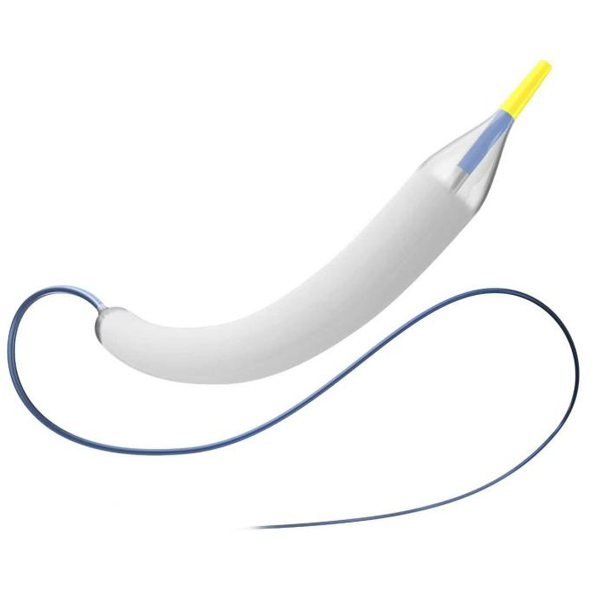
Robust coating for efficient drug transfer: Using the patented coat first then crimp process, drug is applied to the fully expanded balloon before folding and crimping, supporting consistent, high quality drug loading. The balloon carries paclitaxel with iopromide as carrier, with a drug load of 3 μg/mm² and target vessel drug retention of ≥ 60 %. Upon dilation, drug rapidly transfers into vessel tissue to maintain therapeutic levels.
Excellent deliverability: Enabled by its coating technology, Python DCB features a minimal crossing profile down to 1.28 mm, compatible with 5 Fr sheaths, supporting smooth trackability and improved crossability through complex lesions.
Controlled dilation performance: Nominal pressure is 8 atm, rated burst pressure ranges from 14 atm to 16 atm, and recommended inflation time is at least 120 seconds. Operators have a broad safe operating window for dilation, mitigating risks of balloon rupture or insufficient drug transfer.
Compared with coronary anatomy, peripheral vasculature presents broader and more complex anatomies, with wide variability in vessel diameter, lesion length and calcification across segments. Femoropopliteal disease carries high prevalence with highly variable lesion morphology; long segment occlusions remain one of the most intractable challenges in peripheral intervention.
Python DCB comes in 47 available specifications, with diameters ranging 2.0 mm 7.0 mm and lengths 60 mm 200 mm. It is indicated for percutaneous transluminal angioplasty (PTA) of de novo lesions, restenotic lesions and in stent restenosis within the superficial femoral, popliteal and infra popliteal arteries. Its design specifications are backed by real world clinical validation, delivering value extending beyond isolated technical parameters.
The multicenter IN DEPT SFA trial was led by Professor Weiguo Fu (Zhongshan Hospital, Fudan University), with participation from top vascular surgery sites including Beijing Anzhen Hospital, Chinese PLA General Hospital and the Second Xiang ya Hospital. The study enrolled 160 patients, 54.9 % with total occlusions and a mean baseline stenosis of 94.3 %, representing a high risk, complex patient population beyond routine clinical presentations.
Published in the Journal of Vascular and Interventional Radiology (JVIR), study outcomes demonstrated an 84.4 % primary patency rate at 12 months, with a clinical driven target lesion revascularization (CD TLR) rate of only 3.1 %. Most patients avoided repeat revascularization within the first year. These outcomes reduce indirect costs associated with repeat procedures, additional device consumption and re admission, delivering meaningful health economic value amid cost control pressures in China.
Notably, eight year follow up data report a CD TLR rate of 16.08 %. The dataset supports durable long term vessel patency rather than only short term procedural success. Globally, “one procedure, long term clinical benefit” is a key value proposition for physicians, patients and payers — and forms the core rationale for Kossel’s global launch of Python DCB.
Peripheral intervention is a core strategic business pillar for Kossel. The company has built a comprehensive peripheral product portfolio including vena cava filters, peripheral thrombus aspiration systems, scoring balloons and peripheral IVUS catheters. Adding Python DCB strengthens Kossel’s market position in peripheral arterial disease treatment. Parallel technical cooperation will advance the company’s roadmap from third party global distribution toward in house iterative product development.
From Clinical Validation to Global‑Scale Commercial Rollout: A New Blueprint for Chinese Med‑Tech Global Expansion
Driven by aging populations, rising PAD prevalence and expanding adoption of minimally invasive procedures, the global peripheral interventional device market is growing rapidly. According to QY Research, the market reached RMB 76 billion in 2025 and is forecast to hit RMB 123.64 billion by 2032, corresponding to a 7.3 % compound annual growth rate.
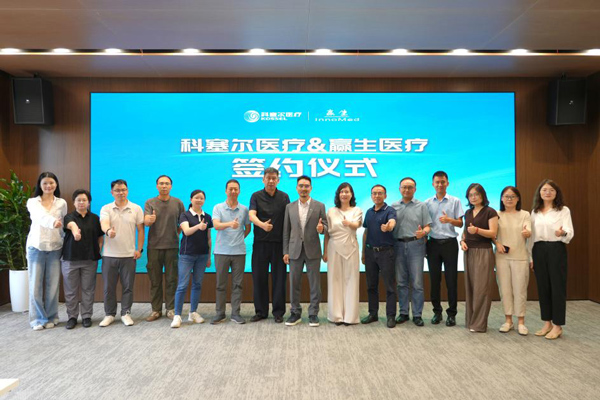
According to Kossel, competition within China has grown increasingly intense. Centralized procurement and healthcare‑system payment reforms continue to compress pricing room, placing widespread dual pressures of commercial execution and sustained innovation on industry players. Medical‑device development is inherently collaborative consolidation‑oriented in nature, and China’s med‑tech sector is undergoing accelerated industry consolidation. Kossel operates manufacturing sites across Europe and Southeast Asia, with operational systems aligned with international standards. This collaboration aims to jointly deliver high‑quality, competitive China‑origin innovative medical devices and build Chinese brands with global influence.
For InnoMed, this collaboration represents the fastest, most scalable path for Python DCB’s global commercialization. China’s comprehensive manufacturing ecosystem and engineering talent form a strong competitive foundation for China‑origin med‑tech players. InnoMed contributes independent R&D capabilities, including in‑house development of core production equipment; Kossel brings mature global commercialization infrastructure. Their complementary strengths enable expanded global product pipelines and real‑world commercial deployment.
Over two decades of development, China’s pan‑vascular interventional sector has attracted numerous market participants, yet larger scale does not always equal stronger industrial capability. As international markets have become an indispensable strategic priority, how to deliver Chinese innovations through structured, high‑value global market expansion will define the next phase of industry landscape. This collaboration between Kossel and InnoMed establishes a replicable blueprint: lowering barriers to global market entry through precise alignment of products and channels, while securing long‑term building of core capabilities via technology transfer. This combined “product + channel + technology” integrated offering transforms overseas expansion from a solitary undertaking for individual enterprises into systematic value output from China’s med‑tech industrial chain.
References
- VINNOVA 2026 | Guo Wei. China Vascular Surgery Medical Device Industry Innovation and Development Report. Clinic Vascular & Endovascular News
- Chinese Expert Consensus on Standardized Application of Lower Limb Arterial Drug Coated Devices (2025 Edition). Chinese Journal of Practical Surgery
- A New Drug Coated Balloon for the Treatment of Superficial Femoropopliteal Artery Disease: 12 Month Results from the IN DEPT SFA Trial. Journal of Vascular and Interventional Radiology (JVIR)
- QY Research. 2026 Global Peripheral Vascular Intervention Device Market Size, Major Players, Domestic & Global Market Share and Ranking Report