
Kossel’s SPEQTA® microcatheter has recently completed its first clinical application at Kobe City Medical Center General Hospital (神戸市立医療センター中央市民病院) in Kobe, Japan. The procedure was performed by Dr. Nobuyuki Obara of the hospital’s Department of Neurology.
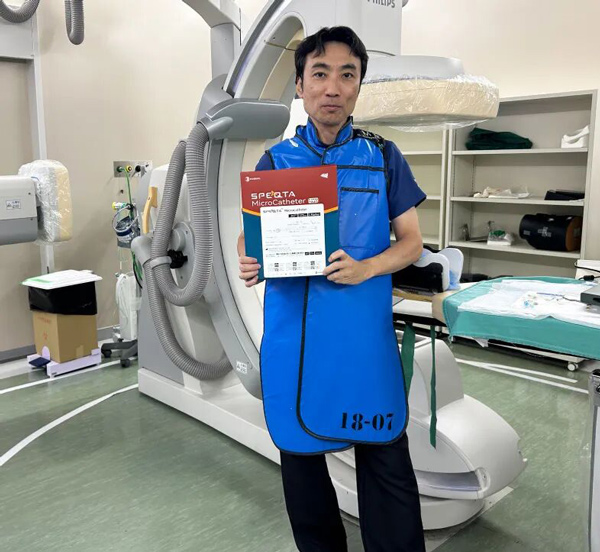
SPEQTA® microcatheter had previously obtained market access in Japan, making it Kossel’s first neurointerventional product approved in the country. This first clinical application marks an important step forward for Kossel’s neurointerventional business in Japan, moving from regulatory approval to clinical adoption.
01 Clinical demand drives development, with R&D and manufacturing working in tandem
The SPEQTA® microcatheter was developed jointly by Kossel and Japanese physicians under a clinician–engineer collaboration model, and is designed primarily for device delivery in interventional procedures for acute ischemic stroke (AIS).
During development, the team gathered extensive input from key opinion leaders (KOLs) to identify and address clinical pain points through design optimization. Before launch, prototype samples underwent repeated KOL evaluation and iterative feedback to ensure the design genuinely matched clinical needs.
The device features a graduated stiffness profile — reinforced proximally and flexible distally — enabling the microcatheter to remain responsive and controllable even through tortuous anatomy. Its distinctive braided-and-coil composite structure enhances pushability while improving shaft flexibility and kink resistance. A 100 cm hydrophilic coating provides smoother navigation and maintains consistent performance during lengthy, complex procedures. The 175 cm effective length supports delivery of devices such as stent retrievers to the middle cerebral artery.
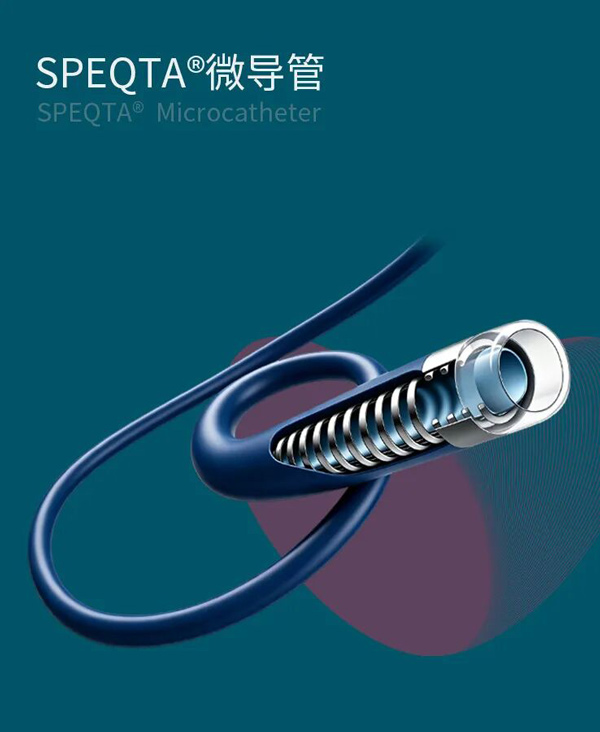
These performance characteristics depend on precision manufacturing. The main body of the SPEQTA® microcatheter is produced primarily by Haiwin Medtech, a subsidiary within the Kossel group.
As an important part of Kossel’s strategy in medical polymer materials and precision tubing, Haiwin Medtech focuses on the development and production of medical polymer products. It currently operates more than 30 dedicated production lines, including three Class 10,000 (ISO Class 7) cleanrooms of over 1,000 m² each and more than 20 specialized extrusion lines. Its business covers precision extruded tubing, reinforced tubing, heat-shrink tubing, PTFE tubing, sheaths, catheters, and value-added post-processing services, forming a complete industrial ecosystem from base-material forming to finished-device processing.
02 Recognition in the Japanese market, with positive clinical feedback
As one of the world’s major medical device markets, Japan maintains a stringent regulatory system with high requirements for product registration and market access, quality management, and post-market surveillance. Obtaining market access in Japan is an important indication that the product’s quality has earned international recognition.
As clinical use has expanded, SPEQTA®’s intraprocedural performance has been endorsed by frontline clinical staff in Japan, further demonstrating that the product’s safety and efficacy have been validated in practice and that it meets clinical needs.
As of November 10, several Japanese hospitals had used the SPEQTA® microcatheter in relevant procedures. This clinical experience provides a solid foundation for further promotion of the product in the Japanese market.
03 Deepening the global footprint so innovative products reach more patients
In recent years, Kossel has continued to advance its platform-based, ecosystem-oriented, and international expansion strategy, making steady progress in product registration, market access, and clinical application. The first clinical application of the SPEQTA® microcatheter in Japan not only advances the product’s clinical adoption in overseas markets, but also provides new practical experience for Kossel to accumulate international market knowledge and expand its global business footprint.
In the future, Kossel will continue to be guided by clinical needs, deepen exchanges and collaboration with international clinical experts and partners, and promote clinical application of innovative vascular interventional products in more countries and regions, offering physicians and patients worldwide more high-quality products and solutions.