
Introduction
Kossel Medtech (Suzhou) Co., Ltd. (“Kossel”) has completed the acquisition of Shanghai Xinzhi Medical Technology Co., Ltd. (“XINZHI MEDICAL”), marking a key strategic step in its transformation from a leading peripheral intervention company into a comprehensive vascular intervention platform.
The acquisition significantly strengthens Kossel’s drug-coated balloon (DCB) technology platform by adding both sirolimus-coated and paclitaxel-coated balloon products to its portfolio. It also enhances Kossel’s coronary intervention product matrix, combining scoring balloons, drug-coated balloons, and drug-eluting stents to provide comprehensive clinical solutions for coronary artery disease treatment..
Looking ahead, China’s PCI market continues to offer substantial growth potential, while global penetration of drug-coated balloons remains relatively low. Supported by Kossel’s integrated R&D and manufacturing capabilities, together with its established commercialization network in China and overseas markets, the clinical adoption of its coronary products is expected to accelerate. Beyond product expansion, this acquisition represents an important step in Kossel’s strategic upgrade and global growth ambitions
China’s medical device industry is undergoing significant transformation under the influence of volume-based procurement (VBP). According to IQVIA, China’s medical device market reached RMB 487 billion in 2025, growing 1% year-on-year and entering a period of adjustment. In contrast, the vascular intervention sector demonstrated strong resilience, achieving 8% growth and outperforming the overall market.
National procurement policies are reshaping the competitive landscape. The sixth national VBP program for high-value medical consumables, covering drug-coated balloons and urological intervention products, introduced new pricing mechanisms designed to encourage innovation and clinical value. As a result, competition is increasingly shifting from price-driven to value-driven, accelerating industry consolidation and domestic innovation.
Against this industry backdrop, product innovation and strategic M&A have increasingly become important pathways for medical device companies seeking sustainable growth and long-term competitiveness. Over the past year, the industry has seen a notable increase in investments focused on innovation-driven R&D and corporate acquisitions.
According to Artery Network, Kossel, a leading player in the peripheral intervention market, recently completed the acquisition of Shanghai Xinzhi Medical Technology Co., Ltd., a developer of coronary drug-coated balloon technologies. Following its earlier strategic acquisition of Shanghai Biotriton Medical Technology Co., Ltd to strengthen its peripheral vascular intervention business, this transaction represents another important milestone in Kossel’s expansion into the coronary intervention market.
As industry consolidation continues to accelerate, Kossel’s series of strategic acquisitions not only demonstrates the company’s ability to execute its long-term growth strategy, but also reflects broader trends shaping the vascular intervention industry.
01
Positioning for the “Leave Nothing Behind” Era with High-Growth Functional Balloon Technologies
The acquisition adds both sirolimus-coated and paclitaxel-coated balloon technologies to Kossel’s coronary intervention portfolio, strengthening its position in the rapidly growing functional balloon segment.
Kossel’s decision is based on two key trends: the expanding market opportunity for functional balloons and the increasing clinical maturity of sirolimus-coated balloon technology.
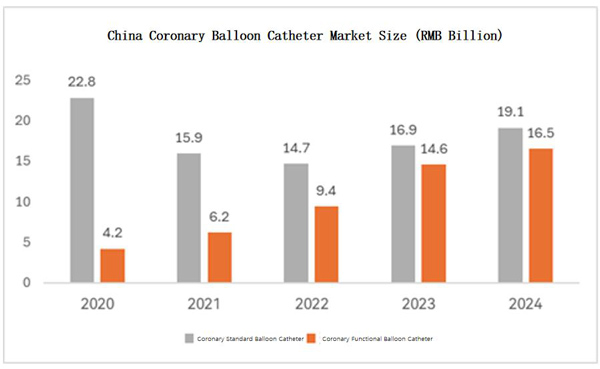
Following national procurement programs, the use of drug-coated balloons has grown rapidly. As the “leave nothing behind” treatment philosophy gains global acceptance, drug-coated balloons are becoming an increasingly important therapeutic option in coronary intervention. While the conventional coronary balloon market has experienced pressure, advanced balloon technologies—including scoring balloons, cutting balloons, specialty balloons, and drug-coated balloons—continue to achieve strong growth.
Source: Frost & Sullivan Analysis
Recognizing this important clinical trend, Hu Qing, Founder and CEO of Kossel, commented:
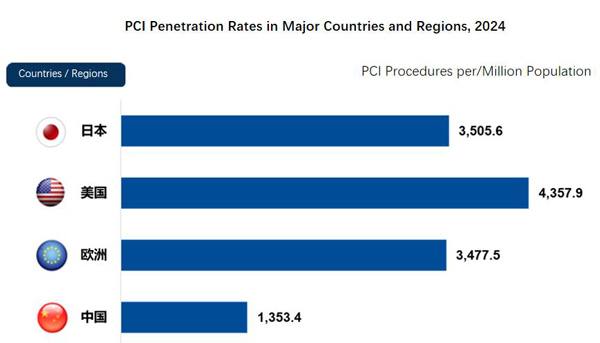
“Kossel has been dedicated to the vascular intervention field for more than a decade. Coronary intervention represents a highly attractive market with significant long-term growth potential. In 2024, approximately 2.21 million PCI procedures were performed in China. However, PCI penetration remains substantially lower than that of developed markets. Driven by population aging and increasing treatment adoption, we believe the annual PCI volume in China could ultimately reach 4 to 5 million procedures, leaving considerable room for future growth.
At the same time, the ‘leave nothing behind’ treatment philosophy is driving broader adoption of drug-coated balloons in PCI procedures, making this a pivotal period for industry transformation. In China, volume-based procurement programs have helped increase the utilization of drug-coated balloons to more than 18% of PCI procedures. By contrast, penetration in international markets remains relatively low, indicating that the global adoption of drug-coated balloon technology is still in its early stages.”
Source: Frost & Sullivan Analysis
From a technology maturity perspective, sirolimus-coated balloon technology is approaching a stage of scaled clinical adoption and is widely regarded as a potential next-generation standard in drug-coated balloon therapy.
Currently, drug-coated balloons primarily use either paclitaxel or sirolimus as the active pharmaceutical ingredient, with paclitaxel remaining the dominant modality. Compared with paclitaxel, sirolimus offers advantages in restenosis inhibition, safety profile, and broader therapeutic applicability, leading to higher acceptance among physicians. However, the clinical adoption of sirolimus-coated balloons has historically been limited by technical challenges, particularly the low lipophilicity of sirolimus, which made rapid and effective drug transfer to the vessel wall difficult. As a result, paclitaxel-based technologies have maintained a leading market position.
In recent years, this technical bottleneck has been addressed through innovations in excipient and formulation technologies, enabling effective drug adhesion to balloon surfaces and improving in vivo drug delivery performance.
XINZHI MEDICAL is one of the few companies in China with proprietary core excipient technology for sirolimus-coated balloons. Its independently developed sirolimus-coated balloon received approval from the National Medical Products Administration (NMPA) in 2025. The product’s technological maturity and development stage place it among the global first-tier players.
The core value of Kossel’s acquisition lies not only in completing its coronary drug-coated balloon product portfolio, but also in positioning the company ahead of the next wave of coronary intervention technology upgrades and securing a strategically differentiated global asset.
Globally, sirolimus-coated balloon technology is increasingly emerging as a new benchmark. At the 2025 Transcatheter Cardiovascular Therapeutics (TCT) conference in the United States, a key real-world study demonstrated that sirolimus-coated balloons achieved non-inferior outcomes compared with stents in a real-world population that included more than 60% complex lesions and de novo large-vessel disease. This finding suggests a potential trend toward partial replacement of traditional stent-based therapies, highlighting significant market potential.
Pan Xingzhen, Executive President of Kossel, stated:“The introduction of sirolimus-coated balloon technology represents a major breakthrough in cardiovascular intervention, providing clinicians with more treatment options. Its advantages in restenosis inhibition and safety profile make it a key innovation focus for interventional cardiologists worldwide, and we believe it has broad global market potential.”
Hu Qing further commented:“The drug-coated balloon segment is characterized by high technological barriers and strict regulatory requirements, and only a limited number of companies possess full-chain competitiveness. Kossel has established a global footprint, and our U.S.-based R&D and manufacturing center serves as a strategic foundation for global competition. Against this backdrop, increasing our investment in coronary intervention is a strategic step for Kossel as it transitions from a regional leader to a world-class vascular intervention platform company.”
02
Building a Comprehensive Coronary Intervention Solution Through an Integrated Product Portfolio
Following the acquisition of XINZHI MEDICAL, Kossel has established a comprehensive coronary intervention portfolio consisting of scoring balloons, dual-technology drug-coated balloons, and drug-eluting stents. The portfolio covers the full spectrum of coronary intervention procedures, including lesion preparation, stent-free treatment, and stent implantation when clinically required, enabling Kossel to provide integrated solutions across diverse clinical scenarios.
For lesion preparation, Kossel’s flagship product, the Seledora® Coronary Scoring Balloon Dilatation Catheter, is designed to address complex coronary lesions, including moderate-to-severe calcified lesions. The product effectively facilitates vessel preparation and has gained strong market recognition through extensive clinical adoption and commercialization. Kossel has also entered into a strategic promotion partnership with Medtronic for the product, while securing inclusion in multiple regional volume-based procurement programs.
In the drug-coated balloon segment, the acquisition adds two complementary technology platforms to Kossel’s portfolio. The paclitaxel-coated balloon incorporates a proprietary MultiLayerPTX coating technology that delivers uniform coating performance with drug loss rates below 15%. The product has already been selected under China’s national volume-based procurement program and is expected to benefit a growing number of patients. Meanwhile, XINZHI MEDICAL’s sirolimus-coated balloon platform represents one of the most advanced technologies in the industry. The product received approval from China’s National Medical Products Administration (NMPA) in 2025 and ranks among the leading sirolimus-coated balloon technologies globally. Following the acquisition, Kossel plans to accelerate its clinical adoption in China and expand commercialization into international markets.
In the drug-eluting stent segment, Kossel offers the MiStent® Sirolimus Eluting Absorbable Polymer Coronary Stent System, an ultra-thin strut coronary stent featuring proprietary supercritical fluid coating technology. This technology enables sirolimus to be embedded in biodegradable PLGA polymer in crystalline form, providing rapid endothelial healing through early drug release while maintaining sustained therapeutic efficacy through controlled polymer degradation. The combination of thin-strut design and controlled bioabsorption aligns well with the growing demand for precision PCI and long-term vessel patency. The MiStent® system has received regulatory approval and provides physicians with an additional treatment option for coronary intervention procedures.
In addition to these core products, Kossel offers a broad range of supporting products, including guidewires, hemostatic valves, and inflation devices, helping meet diverse procedural needs. Together, these products create strong synergies in clinical promotion and commercialization, further accelerating Kossel’s penetration into the coronary intervention market.
With the acquisition, Kossel has formally established a platform-based business structure spanning four strategic segments: peripheral intervention, coronary intervention, electrophysiology, and core medical materials. These complementary business lines are expected to serve as key growth drivers for the company.
Kossel’s ability to continuously expand its portfolio is built upon years of dedication to vascular intervention and deep clinical insight. The acquisition of XINZHI MEDICAL reflects the company’s commitment to addressing unmet clinical needs and capturing emerging technology trends. Over the next three to five years, Kossel plans to further increase investment in coronary intervention innovation and clinical development, strengthen its comprehensive product portfolio, and accelerate the commercialization of high-value medical technologies worldwide, reinforcing its position as a leading vascular intervention platform company.
Source:
[1] National Center for Cardiovascular Quality Control reported that the number of PCI procedures in China reached 2.21 million in 2024.
[2] The utilization rate of drug-coated balloons from 2019 to 2023 was 6.4%, 10.9%, 15.0%, 17.6%, and 18.5%, respectively. — CCIF & CCPCC 2024